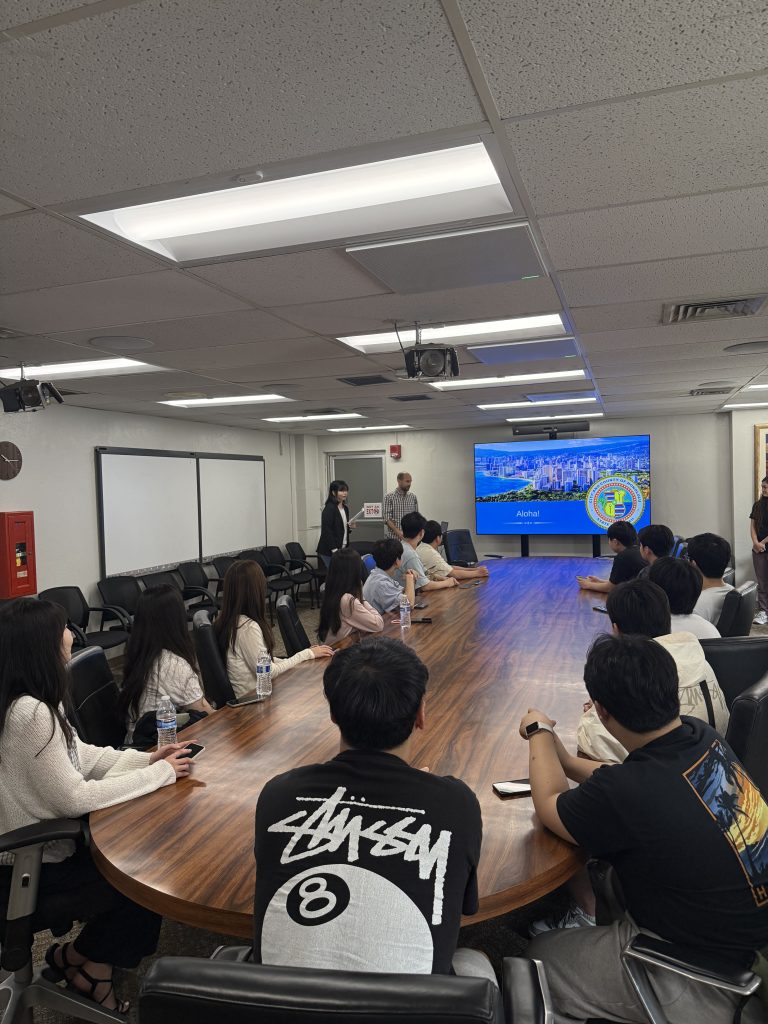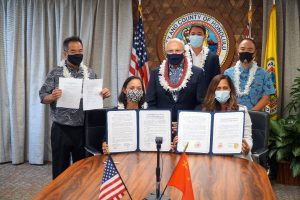
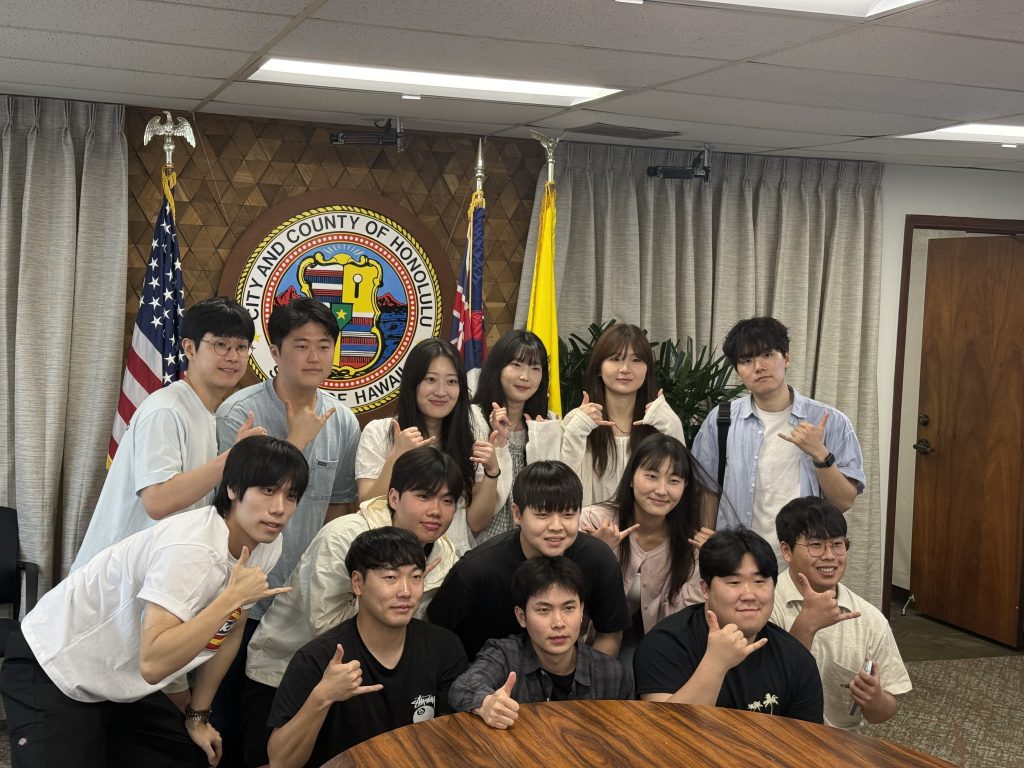
A group of students from Kangwon National University in South Korea recently visited Honolulu to meet with our Office of Climate Change, Sustainability and Resiliency (CCSR). The program CSSR prepared brought them face to face with the city’s civic history, its growing transportation infrastructure, and its deep connections to the land. The visit was a meaningful expression of the close relationship Honolulu has with South Korea, and offered the students an experience of Honolulu well beyond the typical tourist itinerary.
A warm welcome at Honolulu Hale
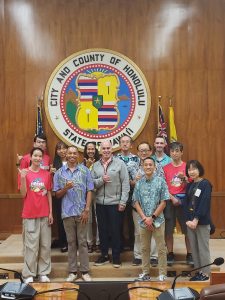
The morning began at Honolulu Hale, the historic seat of city government, where students were introduced to their hosts and given an orientation to Honolulu — its history, its governance, and its place in the Pacific. A brief tour of the building and a round of photos marked the start of what would be a full afternoon of discovery.
Riding the future: a tour aboard Skyline
From Honolulu Hale, the group made their way to the Middle Street–Kalihi Transit Center at Kahauiki, where they boarded Honolulu’s Skyline rail system. The ride out to Honouliuli Station and back offered a moving panorama of the city and a firsthand look at one of Honolulu’s most significant infrastructure investments.
Rooted in place: Stations of Abundance at Hoʻopili
The afternoon’s highlight came at Honouliuli Station in the Hoʻopili neighborhood, where students visited one of the city’s most innovative initiatives: the Stations of Abundance. This City and County of Honolulu program is transforming all 13 Skyline rail stations into food access hubs — places where fresh, affordable, and culturally rooted food is as accessible as catching a train.
The need is pressing. Oʻahu imports nearly 85% of its food, and many residents live far from grocery stores that carry affordable local produce. But for Native Hawaiians, food access carries a deeper significance — it is about restoring a spiritual and cultural connection to the ʻāina, the land that once sustained generations.
At Honouliuli Station, students were able to see muriple varieties of kalo and ʻulu trees planted along Skyline’s corridor — crops chosen not only for their nutritional value but for their deep place in Hawaiian tradition. The plantings follow the Kūkulu Hou methodology, with city staff working alongside Native Hawaiian practitioners to align planting cycles with traditional lunar calendars. By 2028, the initiative aims to scale across all 13 stations, supported by more than 25 community partnerships and a goal of providing one million meals through local food systems.